How to safely do bed sharing/co sleeping with newborn
Did you know that almost all parents share their bed with their baby at some point? In this blog, I’ll share how to safely do bed sharing/ co sleeping with your newborn baby.

What is Co-Sleeping and Bed Sharing?
Co-sleeping means sleeping on the same surface as your baby. This can include a co-sleeper beside your bed or a crib close by. Both options are considered co-sleeping.
Bed sharing, however, is when you sleep in the same bed as your baby. In some cultures, it’s common, but in the Netherlands, where I live, authorities warn that bed sharing increases the risk of SIDS (Sudden Infant Death Syndrome).
As new parents, you might wonder: Can you bed share safely with a newborn? The answer is simple: YES! In this blog, I’ll share how to create a safe sleep space for your baby.
If you’re not ready to bed share, you can set up a separate space for your baby to sleep, like their own safe sleep space or crib. I’ll share below how to ensure the adult bed is free from hazards for baby sleep.
By making thoughtful choices, your baby can sleep safely while staying close to you. You can practice both bed sharing and using a child’s crib or own sleep space safely.
Is it Possible to Safely Do Bed Sharing with a Newborn?
YES, it is! When I was a few months postpartum, I found an amazing protocol packed with research on safe bed sharing with a newborn. Since reading an entire paper can be overwhelming, La Leche League developed the “Safe Sleep Seven” to help parents practice safe bed sharing. Research shows that bed sharing can be safe if you meet these guidelines:
- You are a nonsmoker.
- You are sober and unimpaired.
- You are a breastfeeding mother, and your baby is:
- Healthy and full-term.
- Sleeping on their back.
- Lightly dressed.
- On a safe surface.
They even made a song about it, to the tune of “Row, Row, Row Your Boat”:
No smoke, sober mom
Baby at your breast
Healthy baby on his back
Keep him lightly dressed.
Not too soft a bed
Watch the cords and gaps
Keep the covers off his head
For your nights and naps.
Now, let me break down some key points:
- Risk of SIDS: Always make sure your baby sleeps on their back to reduce the risk of sudden infant death syndrome (SIDS).
- Low birth weight: Babies with low birth weight are at higher risk, so safe sleep practices are crucial.
- Firm mattress: A firm mattress is essential for safe infant sleep. Soft bedding can increase the risk of suffocation, so use a sleep sack to keep your baby safe.
- Safe infant sleep: Create the safest sleep space possible, avoiding soft surfaces.
- Drug use: Avoid any drug use, as it impairs your judgment and greatly increases the risk.
- Partner smokes: If your partner smokes, it’s essential not to bed share, as this also increases the risk of SIDS.
- Restful sleep: A safe sleep environment promotes restful sleep for both you and your baby.
With the right precautions, bed sharing can be a safe and loving way to keep your newborn close. Always follow safe sleep recommendations to ensure your baby’s safety.
Bed sharing with a newborn is only safe for breastfeeding moms
While smoking, drinking, and using drugs are obvious reasons why bed sharing may not be safe, not breastfeeding is another important factor. When you’re under the influence of a substance, you may sleep more deeply and could roll over onto your baby or fail to notice if your baby moves into an unsafe position.
On the other hand, breastfeeding hormones actually help keep you more awake. Have you ever wondered why your husband thinks it was a great night even though the baby woke up four times? As moms, we naturally sleep lighter because we’re instinctively attuned to our baby’s needs. Breastfeeding hormones support this mechanism. That’s why most studies on bed sharing have focused on exclusively breastfeeding mothers.
This is one reason why breastfeeding is part of the Safe Sleep Seven. Additionally, there’s less research available on bed sharing with formula-fed babies.
So, the good news is that breastfeeding moms have an innate advantage when it comes to safely sharing a bed with their baby. Breastfed babies also benefit from being closer to their mother’s breast throughout the night, which can be comforting and help meet their needs.
While a safe sleep environment is essential for reducing the SIDS risk, bed sharing may be the best place for baby during the first months of life, as long as you’re following safe sleep practices. If you feel it’s a good idea, remember that breastfeeding families can safely practice bed sharing with the right precautions. However, it’s important to ensure your child sleeps in a safe sleep space, whether that’s beside you or in their own room.
What does bed sharing has to do with a healthy and full term baby?
Babies that are born prematurely or with a birth weight under 2.5 kg (5.5 pounds) are at a higher risk for SIDS (Sudden Infant Death Syndrome). As a result, bed sharing can pose a greater risk for these babies than for those within a healthy weight range. However, as your baby grows, you may be able to safely bed share. It’s always best to talk to your healthcare provider about this before making any decisions.
If you have a little baby, consider placing a co-sleeper or crib right next to your bed. According to research and the National Health Services (NHS) of the UK, sleeping with your baby in one room can help reduce the risk of SIDS for any baby.
Remember, when considering bed sharing, always prioritize a safe place for your baby to sleep, whether it’s a co-sleeper or crib. Talk to your healthcare provider first for medical advice, especially if your baby has any medical conditions or risk factors. Avoid dangerous situations by following expert recommendations.
How does safely bed sharing look with a newborn?
If you want to practice bed sharing safely and meet all the criteria mentioned above, here’s how to set up your bed:
Create enough space for you and your baby. If you share your bed with your partner, you’ll likely need more than half of the bed. Consider using separate blankets so that you can lay your baby in between both of you. Even though you may protect your baby from your partner rolling over, it can be easy to accidentally turn with your back toward them. Make sure that your baby cannot fall from the bed or get stuck in a wall. Also, ensure the space where your baby lies is clean, with no extra blankets or pillows.
Once everything is cleared, dress yourself warmly so you don’t need a blanket or are comfortable with just covering your legs. Your baby should wear a sleep sack, adjusted to the room temperature. Keep in mind that you’ll also be warming your baby with your body heat.
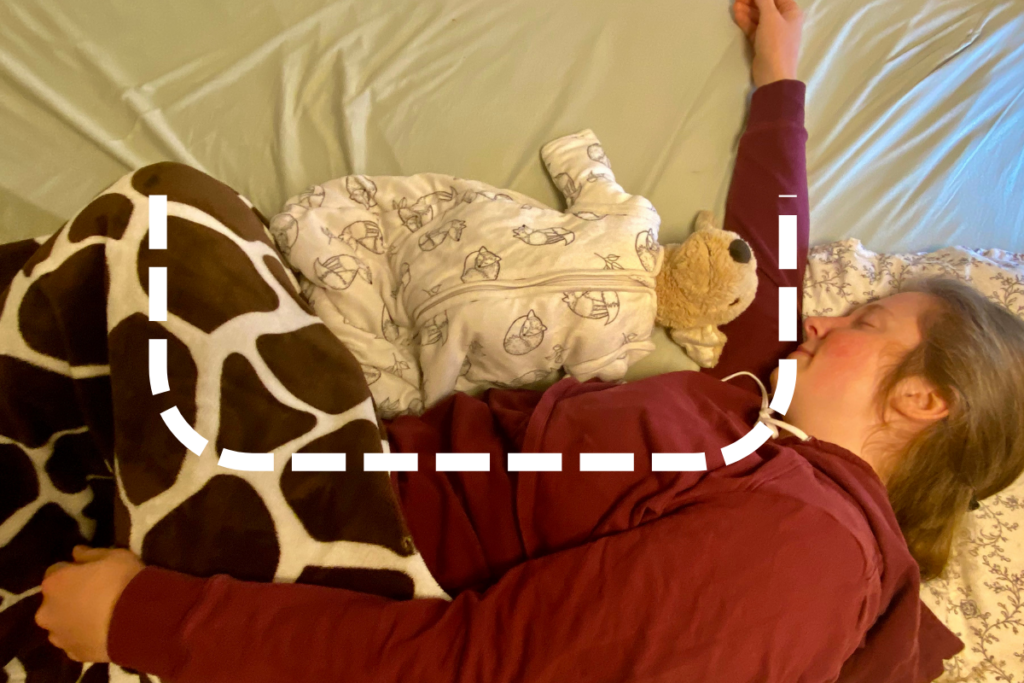
For a safe and cozy setup, lay in the cuddle curl position—place your baby under your stretched arm. Your arm and legs will help protect your baby from moving too far up or down the bed.
This approach to a family bed is common in many cultures, though bed sharing in this way is less common in Western culture. Always remember to prioritize safety and comfort when creating the perfect space for you and your baby.
What are the advantages of safely bed sharing with your newborn?
There are several benefits to bed sharing safely with your newborn. Here are my top 3:
- You get more sleep – Having your baby close by makes nighttime feedings easier, helping both you and your baby get more rest.
- Breastfeeding is easier – Bed sharing allows for convenient, nighttime breastfeeding, promoting bonding and making nursing more accessible.
- Intentional bed sharing is safer than unplanned – When you plan and prepare for bed sharing, you’re more likely to follow safety guidelines, reducing risks.
Getting more sleep
The moment we started bed sharing with our newborn, I finally started getting sleep again. Newborn babies aren’t used to being alone in a quiet, cold room. They’re used to being rocked in the warmth and comfort of mom’s womb. Suddenly, we expect them to sleep alone in their bed at night, and most of the time, that doesn’t work well.
When you’re bed sharing, you can simply close your eyes after (or even while) breastfeeding, instead of doing the dreaded act of laying your baby aside in their crib. It’s so much easier to relax and sleep while your baby is close.
If you’re feeling overwhelmed as a new mom, check out my blog about handling sleep deprivation.
Breastfeeding is easier
Infants need to feed often and for a long time, especially in the beginning. Feeding sessions can take a while, and just as they finish, they may want to nurse again. If you have to get up multiple times during the night to breastfeed, you might eventually consider trying to reduce feedings or substitute with pumped milk or formula. However, the regular stimulation of your breasts helps to boost milk supply, so it’s best to continue frequent feedings, even at night.
Did you know that sitting up can wake you up more? When you can stay lying down while breastfeeding, you’ll not only wake your baby less but also yourself. Bed sharing makes nighttime feedings easier for both you and your baby.

Planned bed sharing with a newborn is safer
Most parents end up co-sleeping with their newborn at some point. Studies show that many mothers fall asleep while feeding their baby in a chair or co-sleeping on a couch. As you can imagine, these places are completely unsafe for bed sharing. Babies can roll off or get trapped between pillows, creating dangerous situations.
When you’re running on just a few hours of sleep for weeks, it’s easy to fall asleep while holding your baby, even if it’s unplanned. However, if you practice planned bed sharing, you can minimize these hazards. With the right precautions, you can reduce the risk of SIDS to the same level as when your baby sleeps in a crib.
What are disadvantages of bed sharing with a newborn?
While I fully support bed sharing, it’s important to acknowledge that it’s not all roses. Though it may sound cozy, bed sharing means you’re sleeping with a newborn, which comes with its challenges. You’re often stuck in one position, constantly checking to ensure your baby is still breathing. Here are my top 4 disadvantages:
- You’re conscious all night long: Since you’re responsible for making sure nothing happens to your baby, you’ll be very conscious of how you sleep all night long, every night. While it’s definitely better than no sleep, I’ll admit, I really enjoyed the day I could freely roll over in my own bed!
- It can be uncomfortable: Let’s face it, laying in the same position all night without a blanket can be uncomfortable. No wonder there are forums filled with questions about how to overcome hip pain when bed sharing. Keep reading to learn some tips on managing discomfort!
- You have to go to bed when baby goes to bed: Newborns sleep a lot, so if your baby only sleeps next to you, you’ll end up spending a lot of time in bed. One solution is to try carrying your baby for naps until you’re ready to go to bed yourself.
- You lose “us” time with your husband: With a baby in the bed, you’ll miss out on those quiet moments with your husband—whether it’s small talks or just cuddling before sleep. It may not seem like a big deal, but I really missed those moments.
How to do make bed sharing comfortable with your newborn
When you practice safe bed sharing with your newborn, you might find it uncomfortable to lie in the same position all night. Some moms don’t experience any issues, but I personally had back and hip pain that would keep me awake. So, there I was, lying next to a sleeping baby at 4 a.m., wide awake! Here are my tips to make bed sharing as comfortable as possible:
How can I lay comfortably in the same position
The simple answer is: you probably won’t be able to stay in the same position all night! If you feel pain lying on one side, try switching after breastfeeding. Turn to the other side to ease discomfort. Using two separate blankets for you and your husband can help keep his blanket away when your baby is between you both. If you turn toward the edge of the bed, try moving so far into the middle that your arm can stretch toward the edge. Your newborn won’t be able to crawl that far without waking you.
Hip pain and bag pain
Lying flat on one side was never a position I was used to. During pregnancy, I had to sleep that way and used a large pillow around me for support. When bed sharing, you can still use a pillow between your legs and behind your back for extra support. This adjustment helped me eliminate hip pain almost completely!

Can I lay on my back?
Officially, lying on your back while guarding your baby with a stretched arm and bent knee is not considered a safe bed sharing position. However, I found that placing a pillow under me to shift my weight from my side to my back worked well. This way, I was still facing my baby but didn’t fully lie on my side. It helped me find a more comfortable position while keeping my baby safe.

How do deal with the cold
Ideally, your room should be between 61°F and 65°F (or 16-18°C) for safe sleep. That’s not exactly warm, especially when you’re not using a blanket. When you’re breastfeeding often or sometimes even sleeping with your baby latched, you may find yourself partially uncovered. My tip is to wear one (or even two!) sweaters designed for breastfeeding. This way, you can stay warm while still easily uncovering your breast to nurse.
What do I do if my baby only want’s to sleep while nursing?
To practice safe bed sharing, you’ll likely nurse your baby to sleep and continue from there. Sometimes, babies fall into a deep sleep while latched to your breast and wake up as soon as you unlatch them. As long as you’re not dealing with painful nipples, this isn’t usually a problem. However, it’s important for your baby to sleep on their back as much as possible for safety.
Sometimes my baby would roll onto her back while still latched, and I would just let her stay that way and go to sleep. Eventually, she would let go, but by then, we were both deep in dreamland!
If I practice bed sharing safely will my baby ever learn to sleep in her own crib?
This was a question that bothered both my husband and me when we first started bed sharing. If you’re wondering whether your baby will eventually sleep in her own crib, I encourage you to read my blog about how to sleep train your little one.
We only practiced bed sharing when our baby struggled to sleep. For a while, she was perfectly content in her own crib. However, when she turned 6 months, she became much more active, and bed sharing became more complicated. We decided to sleep train her, and she’s been sleeping soundly in her own bed ever since.
What are your experiences and struggles with bed sharing? How did you solve it? Leave a reply—I’d love to hear all about it!