How to sleeptrain the right way with Ferber Method + tips
Want tips on using the Ferber method for sleep training? I’ll share our experience and some helpful sleep training advice to sleeptrain with the Ferber method!

Mastering the Ferber Method: Quick Guide to Successful Sleep Training
The Ferber Method is a kinder twist on the “cry it out method,” created by Dr. Ferber. It’s a technique that many new parents turn to when they’re struggling with their baby’s sleep. The idea is simple: lay your baby down drowsy but awake, and let them cry. You’ll check on them at set intervals, gradually increasing the time between checks, until they drift off to sleep. If they wake up in the middle of the night, you repeat the process. This approach is less intense than the extinction method, which involves letting your baby cry without check-ins, and it helps your baby learn to self-soothe.
Before starting any sleep training, especially with different sleep training methods out there, it’s important to get the green light from your doctor. Every baby is different, and the best approach depends on their individual needs and development. For many parents, the Ferber Method is a great way to get their baby to sleep in their own room, which can feel like a huge milestone. It helps create long-term sleep habits that can lead to fewer sleepless nights and better rest for the whole family.
The Best Time to Start Sleep Training with the Ferber Method
The general recommendation is to start sleep training no earlier than six months. Some families begin during the four-month sleep regression, and their kids did just fine. My tip is to wait until your baby has turned six months old. At this point, she will be able to self-soothe with a little cuddling cloth or by sucking on her thumb. On the other hand, she will not be able to stand in the crib yet, which will make things a lot easier. But in the end, I think it is best to start when you feel comfortable and confident to do so!
I’ve heard different reviews on sleep training for older children, and many parents have mixed opinions about whether it truly leads to uninterrupted sleep. While some find it successful, others face challenges along the way. For us, the key was finding the right time to start. We realized that the best time to begin sleep training was when our baby was around six months old. This was when she was developmentally ready to sleep for longer stretches and start learning how to self-soothe. Starting at this point made all the difference for us, and choosing the Ferber Method was the best thing we could have done. It’s a popular method, and for us, it worked wonders. The good news is that by starting at the right time, we both enjoyed better sleep, and our baby learned to sleep independently much faster than we expected
Why We Chose the Ferber Method for Sleep Training
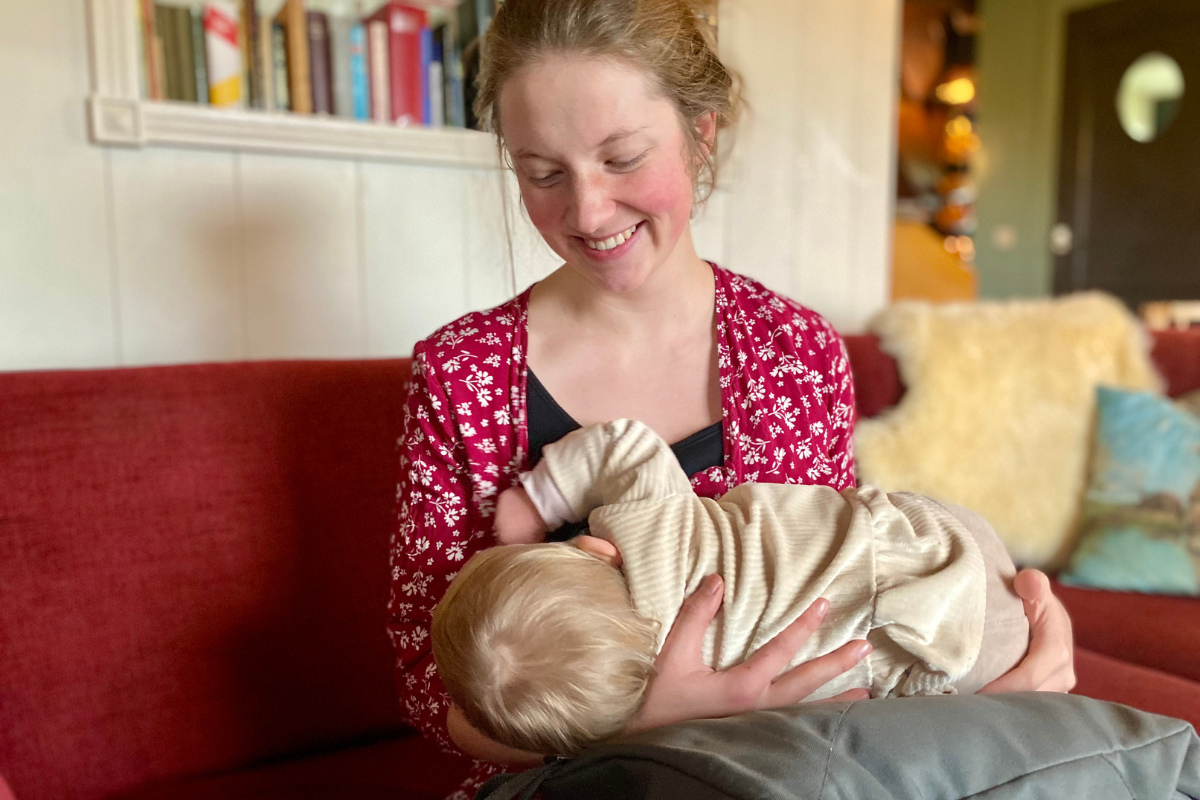
In the first six months, I tried various methods to help my baby fall asleep: nursing or rocking her to sleep, staying in the room until she drifted off, bed-sharing, co-sleeping, and lots of carried naps. As time passed, these routines became more time-consuming. Initially, I could rock her to sleep and leave the room within 20 minutes. By six months, it took 45 minutes or more. She also started waking up sooner. Even after 45 minutes of settling her, she’d sleep only 20 more minutes before needing the process to start again. To get some sleep, we decided to bed-share at night. This meant no evenings alone and no bed to ourselves. We realized it was time for our girl to learn a new skill and move to her own crib.
We chose the Ferber method of sleep training because, from my own experience, I was afraid that a more hands-on sleep training technique, like the chair method, would be too emotionally overwhelming for me. I worried it would lead to more tears in the long term, as it might take longer to see results. The Ferber method felt like a good idea—structured yet manageable—helping us stay consistent without feeling completely drained. It offered a way for our baby to learn to self-settle and eventually sleep peacefully in her own crib.
My Top Tips Before Starting the Ferber Method for Sleep Training
Here are three tips to try before sleep training with the Ferber method:
- Set a bedtime routine.
- Make sure your baby isn’t too tired (or too energetic).
- Put your baby to bed at the same time each night.
We aimed for a consistent bedtime, usually between 7 p.m. and 7:30 p.m. Our bedtime routine was the four B’s: bath, breast (or bottle), book, bed. It helped our daughter recognize bedtime and start producing melatonin (the magic sleep hormone).
Also, make sure your baby naps enough—not too much, not too little. You can check the right amount of sleep based on your baby’s age and wake windows!
Should You Start Sleep Training with Naps or Nighttime?
We started sleep training at bedtime, not nap time. Here’s why:
- If your baby is a night owl (and you’re losing sleep), it might surprise you, but babies sleep best at night! Circadian rhythms tell us to sleep at night, so your baby is likely to fall asleep easier then. We found our daughter cried less at bedtime compared to nap training.
- Our baby’s nighttime sleep was way messier than her daytime sleep. We could manage contact or carried naps during the day, but the night wakings really took our rest.
Now, a good reason to try nap training first could be that your baby is usually less stressed in the morning. But just remember—after a good rest, they might cry longer since they’ve got more energy to burn!
How We Handle Check-Ins During Sleep Training
After putting our baby down, we’d leave the baby’s room and start a timer as soon as the crying began (which was pretty much as soon as she hit the mattress). When the timer went off and the crying kept going, we’d do a check.
There are different ways to do the checks, but consistency is key with the Ferber method. To stay on track, my husband and I made a plan for the checks:
- We’d go in and make the ‘shh’ sound or said a brief reassurance
- We’d remind our baby that we love her.
- We’d gently pat her belly or back until she calmed down—no longer than 1 minute.
- Then, we’d leave the room again.
It wasn’t always easy, but keeping it consistent helped us both stick to the plan!
How Often Should You Do Check-Ins with the Ferber Method?
Here’s a table from Richard Ferber’s book, Solve Your Child’s Sleep Problems, showing check time intervals during sleep training:
| 1st check | 2nd check | 3rd and subsequent checks | |
| Day 1 | 3 minutes | 5 minutes | 10 minutes |
| Day 2 | 5 minutes | 10 minutes | 12 minutes |
| Day 3 | 10 minutes | 12 minutes | 15 minutes |
| Day 4 | 12 minutes | 15 minutes | 17 minutes |
| Day 5 | 15 minutes | 17 minutes | 20 minutes |
| Day 6 | 17 minutes | 20 minutes | 25 minutes |
| Day 7 | 20 minutes | 25 minutes | 30 minutes |
Now, let me tell you a little secret from our own sleep training experience. The Ferber table didn’t exactly work for us. We found that, surprisingly, our daughter calmed down quickly after we checked in. Sure, she’d cry when we left, but after a few moments, she was calmer than before.
We followed the plan for the first two days, but by Day 3, we adjusted things. We did 8 minutes for the first check and 10 minutes for the second. And honestly, that was as far as we went. It worked, and we were happy.
In the end, I believe it’s all about confidence. Do what feels right for you and your little one. There’s no one-size-fits-all when it comes to sleep training!
To Wean or Not to Wean During Sleep Training?
We decided not to fully wean our baby during sleep training. There’s some research showing that babies over 6 months can go 6 hours without breastmilk. But there’s no research to suggest they can go any longer than that after 6 months. The La Leche League actually recommends waiting until 18 months for night weaning.
Of course, some babies naturally wean earlier—ours didn’t! Personally, I chose to feed her if she wakes after 6 hours. Some nights she does, other nights she doesn’t. And honestly, that’s okay with me. Sleeping through the night wasn’t my main goal when we started Ferber’s method, so I’m happy with how things are going!
MNavigating the Pacifier During Ferber Sleep Training: My Tips
Our baby was super attached to her pacifier. If it fell out, she’d wake up. But as soon as it touched her lips, she’d drift right back to sleep—like magic! So, I was torn about what to do with the pacifier. Here are my three simple tips if you’re sleep training with the Ferber method and your baby loves their pacifier:
- Use the pacifier as much as you need before sleep training.
- Go cold turkey when you sleep train.
- Take it away both during the day and at night—at the same time.
I once heard a quote: “Parents are more afraid of taking the pacifier away than babies are.” Honestly, I couldn’t agree more! I was terrified of not having that little piece of comfort to calm her down when she made an unhappy sound. I also worried if she could even fall asleep without it. But in the end, I decided to go cold turkey for a couple of reasons:
First, the sucking reflex disappears after the first 3 months, so she didn’t actually need it. Plus, I didn’t want her walking around as a toddler with a pacifier. No matter what, there would be tears at some point, so I figured, “Why not just get it over with once (and maybe a little more) instead of dragging it out?”
The surprising thing? Our experience getting rid of the pacifier actually went great! The tears were brief, and she adjusted faster than I ever expected. I’m so glad we just took the plunge and did it all at once.
How much did our baby cry in the process?
First night:
Our little girl cried for 25 minutes at bedtime the first night. We went in three times until she finally drifted off. She woke up for the first time 15 minutes later (pretty typical for her), but surprisingly, she calmed down after just 6 minutes of crying and one check. Later in the evening, she woke up again but barely cried—just a little complaining before falling silent. We only checked in twice during the 40 minutes she was awake. She woke up at 1 am for a feed and again at 4 am, but settled quickly both times.
Total crying time: Just over an hour.
Second night:
The second night was even better! She took 35 minutes to fall asleep but only cried for 20 minutes. We checked in twice. She woke up at 10 pm, and after 10 minutes of fussing (and one check), she settled back to sleep. Then, get this—she slept until 5:40 am! I literally marked it in our diary with a big !! I fed her and she went right back to sleep.
Total crying time: Less than 30 minutes.
Third night:
Night three was a little discouraging because it took 32 minutes to fall asleep, with 30 minutes of crying. But here’s the thing: we didn’t need to check in as much. She woke up twice but only fussed briefly, so we didn’t go in. The best part? The next morning, she woke up after 12 hours and 15 minutes—hungry and happy! We couldn’t believe it—she actually slept through the night!
Total crying time: 35 minutes.
The following nights:
The rest of the week was pretty similar to nights two and three. By day 7, she fell asleep within 10 minutes. We stopped the diary there, feeling proud that it worked out. I noticed that as the days passed, her crying got softer and turned into more of a little complaint than full-on screaming.
Two months later:
After about two months, she started settling without any tears at all—until her first tooth came in, of course! But overall, after those two months, her crying was minimal. It never lasted more than 5 minutes.
How We Tackled Daytime Sleep With Sleep Training
At first, I tried to nap-train at the same time as tackling nighttime sleep, thinking I could kill two birds with one stone. But quickly, I realized she cried way more during naps, and honestly, it just wasn’t worth the tears for me.
Two weeks after starting sleep training with the Ferber method, I started feeding her to sleep and putting her down. She’d wake up but settle back after a few minutes, and soon enough, she was taking those amazing naps—1 to 2 hours long!
We still do some carried naps here and there since they fit better with our schedule, but I’m so happy she can do both now. In fact, as I’m writing this post, she’s been sound asleep in her crib for 1.5 hours! 🙌
Overcoming Setbacks: My Tips for Pushing Through the Ferber Method
We hit a bit of a tough patch on night 6 and during the second week of sleep training. Our baby cried for almost 45 minutes, and it was really hard to push through. But we stayed strong, sticking to our check-ins every 10 minutes. I’m still not sure why she cried so long, but what helped me was knowing her crying was more moderate than full-on screaming. It gave me a little peace of mind.
If you find yourself in a similar situation, here are three tips to help you push through:
- Stay consistent with your check times, but also listen to your gut.
Consistency is key, but if something feels off, trust your instincts. - Distract yourself so you’re not constantly hearing the crying.
Put in your headphones, turn on some music, or even step outside for a bit. Your baby won’t cry less just because you’re listening, but it helps to take a break. Of course, make sure someone is there to keep an eye on your little one! - Ask for help from your spouse, friends, or family.
If things are tough and you’re just exhausted, don’t hesitate to ask for help. I had my husband do most of the checks because it broke my heart to hear her cry when I left the room. It’s perfectly okay to let others step in or take a moment to distract yourself when needed.
Consistency really is the key to success. I kept reminding myself that all those tears would be wasted if I gave up now—and it worked! But, if your gut tells you something is wrong, definitely listen to it. For me, it was clear that she just couldn’t settle to sleep, and if I took her out of the crib, she’d smile at me, totally fine—awake but perfectly happy.
My Top Tips for Successful Sleep Training with the Ferber Method summarized
Here’s a quick summary of my 6 tips on how to sleep train with the Ferber method:
- Start around six months.
This is when babies are generally ready for sleep training. By then, they’ve developed the ability to self-soothe and can handle longer stretches without feeds. - Start with nighttime sleep.
It’s easier to begin with night sleep since it’s a more consistent and predictable time. Once that’s established, you can work on naps. - Use a good bedtime routine.
A calm, consistent bedtime routine signals to your baby that it’s time to wind down. This can be a warm bath, some cuddles, and a quiet song to help them relax before bed. - Go cold turkey with the pacifier.
If your baby is attached to a pacifier, take it away completely. It’s hard at first, but it will pay off in the long run as they learn to self-settle without it. - Use the intervals you are comfortable with.
The Ferber method suggests gradually increasing check-in times, but feel free to adjust the intervals based on what you’re comfortable with. Trust yourself and your baby’s needs. - Be consistent.
The key to success with sleep training is consistency. Stick to your plan, even on the tough nights, and remember—progress takes time!
The encouragement you need to get started with confidence
In the end, we’re so happy we took the leap and did it! Looking back, I had two major fears:
First, I worried that sleep training would affect the bond between me and my baby. Second, I questioned what kind of mom I’d be if I let my baby cry without soothing her. But in the end, nothing changed between me and my little girl. I still felt like the same mom—just a little more rested!
So, if you’re about to get started, good luck! And if you have any questions, feel free to leave a comment below. You’ve got this!