How to be a stay at home mom when you can’t afford it
Many of my mom-friends would like to stay home with their kids at least when they are very small. But how can you be a stay at home mom when you can’t afford it? In this blog I share my practical tips on how to live frugally and make money while staying at home along with encouragement to keep you going.

Why is it difficult to afford to be a stay-at-home mom?
The obvious answer to that question is: because you miss an income if only dad is working and mom stays home. But the real question behind it is: why is a single income not sufficient anymore to provide for a family?
Different answers are depending on your perspective. One might argue that inflation is rising faster than salaries. Or that wages are simply lower than they were in the past. While these are certainly factors, I believe they don’t fully explain the issue.
Young families today often need extra money to cover everyday expenses. Many also have student loans that they’re still paying off, which adds to the financial strain. With these added pressures, relying on just one income has become much more challenging.
Advantages of being a stay-at-home mom
Being a stay-at-home mom has several advantages. The most obvious benefit is the much time you get to spend with your little one, which allows for bonding and creating those precious memories.
Whether you’re raising your first baby or your second child, the ability to focus solely on their needs and development is something many mothers consider priceless. Even if you cannot stay home with your first child, many women want to stay home in the long run. For some, being a stay-at-home mom is the best decision they ever made. It allows for quality time that you just can’t get when working a full-time job.
It’s a challenging but rewarding role, especially when compared to the stress of balancing a part-time job. Dealing with expensive daycare costs adds to that. Child care can add up quickly. For many, the priceless love of a mother far outweighs the need for extra income. But that is quickly said if you feel like you have no joice. Hang on as I share my tips to make money at home later.
Disadvantages of being a stay-at-home mom
Being a stay-at-home mom has its disadvantages too. One of the biggest ones is that society often makes us believe it’s not as fulfilling as having a traditional job.
Taking care of the kids, cleaning, cooking, and managing the household is hard work. Because it’s not paid, it can feel like you’re not doing enough to contribute financially. This can make you question your financial stability. Especially when society tells us that having a job outside the home is the only way to be financially independent.
On top of that, there’s the idea that job satisfaction only comes from a career where you’re climbing a ladder or earning a salary. Raising children is incredibly rewarding. But society often downplays the importance of that work, making it hard to feel like you’re accomplishing something.
It’s easy to feel that having a career choice outside the home gives you more value. The truth is, the role of a stay-at-home mom is just as important—it’s just not always recognized that way.
Where were women stay-at-home moms ‘back in the day’?
Even if I didn’t live a century back I remember from history class that women were used to working along with their husbands for a very long time. Work might have looked different than today but in many cases, middle-class women doing paid work too to afford a living.
I think about my grandma working as a night shift nurse back in the 1950s. Even though many women did stay home it surely wasn’t a possibility for all. Even when I think about the ‘little house on the Prairie’ series the mom Caroline used to earn money. She used to raise chickens and sell their eggs, repair clothes for other people, clean, teach, and cook in paid positions when finances were tight. Oftentimes stay-at-home moms were contributing to an income.
As I read the bible it seems that the example of the woman in Proverbs 31 suggests that as well.
13 She selects wool and flax and works with eager hands.
Proverbs 31
16 She considers a field and buys it; out of her earnings she plants a vineyard.
18 She sees that her trading is profitable, and her lamp does not go out at night.
Reading those verses being a work-from-home mom might not be so modern after all. Even if money and its value as well as living standards changed a lot, women often had to contribute to a living for the family. And so can you!
Is feminism the problem that we cannot afford to be a stay-at-home mom?
The rise of feminism has opened career opportunities for women, but it has also created challenges for stay-at-home moms. As more women joined the workforce, the cost of living, particularly housing, increased, making it harder for families to live on one income. This shift has reshaped family life and finances, complicating the traditional stay-at-home mom model.
The Economic Shift with Women Entering the Workforce
Even though women have historically contributed to family income in certain situations, things have definitely changed over time. Some people argue that incomes started to drop when women entered the workforce. Of course they began demanding the same pay for the same work. This argument seems to make sense. If you suddenly have a larger pool of workers, the overall amount of money available might have to be spread thinner. That means each individual might receive less.
There might be some truth to this perspective. As more people, particularly women, joined the workforce, wages didn’t always rise in proportion to the increased number of workers. In fact, many households became dependent on a two-income household to maintain their standard of living. The reality is that, in many cases, a single income just isn’t enough anymore to cover the rising costs of living, from housing to healthcare, and everything in between. With this shift, families now rely on extra income from both parents to make ends meet. This has allowed women more independence and career opportunities. But it has also led to financial pressures that didn’t exist to the same extent when fewer people were in the workforce.
The Paradox of Feminism’s Impact on Homeownership
This shift has reshaped the way we think about work and family life. Now both parents are often working long hours just to provide for their families. And in some ways, this situation has made it harder to feel like we’re truly getting ahead. Wages haven’t kept pace with the increasing demands on our time and resources.
In the 1950s, when families were mostly single-income households, the idea of a woman contributing financially was often overlooked when it came to large financial decisions, like securing a mortgage. Back then, lenders didn’t always factor in a woman’s salary. It was assumed that she would eventually stop working once she had children, or at least scale back her hours significantly. The conventional belief was that a woman’s role was primarily at home. She would take care of the kids, which made her income less reliable in the eyes of banks and financial institutions.
However, as more women entered the workforce, particularly in the latter half of the 20th century, their earnings began to be taken into account when applying for mortgages and other loans. This shift allowed families to qualify for larger loans, which in turn meant they could afford bigger houses. While this was a positive step for gender equality, it also had unintended consequences. As women’s incomes were considered a part of household earnings, housing prices began to climb. They reflected the ability of dual-income families to afford more expensive homes. The housing market started to change. Prices started rising at a pace that many single-income households could no longer keep up with.
Challenges in Today’s Housing Market
In today’s market, it’s almost impossible to buy a home on a single income. The cost of homes has outpaced wage growth, and with the added pressures of student loans, rising daycare costs, and the general cost of living, it’s hard for many families to make ends meet with just one income. Ironically, even though feminism has allowed women to enter the workforce and increase their earning power, the changes it brought about in the housing market have made it much harder for stay-at-home moms to afford a home on their own.
This creates a paradox: the very progress that has allowed women to contribute more financially has also contributed to the increasing difficulty of owning a home on one income. So, while feminism has undoubtedly opened doors for women in the workforce, it has also made the dream of owning a home a much more challenging reality for families who wish to follow the traditional model of a stay-at-home mom.
Is it realistic to be able to afford to be a stay-at-home mom in the 21st century?
Many women face the problem that they have to work. Regardless of their wish to be a stay-at-home mom or not they need it to afford to live. I believe though that it is realistic to be a stay-at-home mom even these days! Let me share how.

Considering the Standard of Living
The first thing when I think about our lives and stay-at-home moms is the standard of living we are used to. According to data from the NAHB analysis the average single-family house in the fourth quarter of 2023 in the US was 2,419 square feet (225 square meters)! According to a recent analysis almost 92% of households own a car, and 37% own two. Owning a new car costs $1,015 a month according to AAA. According to a Smart TV report the average household owns 2.9 TVs in the US and more than 7 screens (source)! I could go on and on with this list but my point is: we cannot live on less money but keep all our luxury.
Exploring Work-from-Home Opportunities
The second thought I have for women who want to afford to be a stay-at-home mom is the following: consider yourself a work-from-home mom rather than just a stay-at-home mom. If you’re committed to staying home with your kids, but still need to make ends meet, there are ways to make some money without sacrificing family time.
The key is figuring out how to balance work and home life in a way that still allows you to be there for your children. If you’re used to a lifestyle with new cars, multiple electronics, and a big house, it might be hard to give those things up. However, it could be necessary to keep your family financially stable. Downsizing to a smaller house or limiting some luxury purchases could make it more possible to live on one income. This would allow you to stay home with the kids while maintaining financial stability.
A stay-at-home parent can still bring in an income, even if it’s part-time or freelance work, to help cover some of the costs. It’s important to understand how much money you really need to maintain your current lifestyle. Finding ways to adjust your spending is key to making it work. The goal is to avoid feeling like you’re missing out while still managing your finances effectively. Sometimes it’s about making small sacrifices in exchange for more time with your family.
Read along as I share the best ways how to live more frugally and make money while staying home.
Top money-saving ideas to afford being a stay-at-home mom
If you want to save money in the short and long run those lifestyle changes:
- Make a budget
- Consider the costs of working
- Safe money with food
- Don’t buy things you can’t afford
- Buy good quality items second-hand
- Make DIYs and use free stuff
- Go on cheap holidays
Make a budget to see if you can afford to be a stay-at-home mom
The Importance of Creating a Budget
Making a budget is one of the most important steps to living more frugally. It helps you take control of your finances and ensures you’re not overspending, which is especially crucial if you’re considering being a stay-at-home mom. To create a budget, start by looking back at the last 6 months of your spending. Take note of how much you’ve spent in each category: groceries, utilities, entertainment, and so on. Identify areas where you might be able to cut back. Could you reduce your dining out expenses or limit online shopping? The goal is to set a realistic spending plan for each category based on what you truly need and what you can live without.
Assessing Your Financial Situation
Once you’ve made your spending plan, you’ll have a clear picture of your monthly expenses. This will allow you to assess whether your current household income is enough to cover everything. It’s important to factor in not only your regular expenses but also any irregular costs that might come up. These could include home repairs or medical bills, which can surprise you. If you’re unsure about setting the right amounts or need help figuring out the details, a financial planner can offer guidance. They can help you organize your bank account and keep track of your finances. A financial planner can also prioritize your savings, ensuring you’re on the right track. This will give you a clear financial roadmap for the future.
Staying Within Your Budget
Having a budget in place means you know exactly how much you can spend on each category every month. Without a budget, it’s easy to get carried away with impulse buys, but when you know how much money is available in each area, you’ll find that some purchases simply won’t happen because you don’t have the money to do them. And that’s the beauty of budgeting—it creates boundaries that keep your spending in check and allows you to make more mindful decisions.
Aligning Your Budget with Your Goals
In the end, if you want to be a stay-at-home mom, it may be more achievable than you think. With a solid budget, you can clearly see what you can afford, where you can cut back, and where you might need to make sacrifices. It’s not about living with less but living in a way that aligns with your financial reality and priorities.
Consider the money that working with kids will cost you
When thinking about working while taking care of kids, it’s important to consider all the extra costs that come with it. First, there are work expenses to keep in mind. This includes commuting, which can add up over time. You also have to think about buying work clothes, especially if your job requires a certain dress code. Another major consideration is health insurance. If your job doesn’t provide health insurance, you might have to pay for it on your own, which can be very expensive.
Childcare is another big cost to consider. Paying for someone to look after your kids can take up a significant portion of your income. Additionally, depending on your tax bracket, you may end up paying a higher percentage of your income in taxes. This could make working outside the home less financially worth it. All these expenses add up quickly. It’s crucial to weigh these factors before deciding. Ultimately, you’ll need to decide if working while having kids is truly the best option for your family.
Safe money with food
Eating out, ordering food, or grabbing coffee at the local shop can quickly eat up a lot of your money. A good idea is to start meal planning to save on food costs. When you plan your meals ahead of time, you can make a shopping list and stick to it at the grocery store, which helps you avoid impulse buys. Cooking at home, especially from scratch, is much cheaper than eating out. By keeping track of what you need for the week, you’ll notice that your grocery bill goes down, and your meals are more cost-effective. For more tips on saving money while grocery shopping, check out my other posts on cutting food costs.
Don’t buy things you cannot afford
Don’t buy things you can’t afford, even if it feels tempting. Using credit cards to make purchases can seem like an easy fix, but it can lead to high monthly payments that add up over time. Even paying a little bit each month can turn into a lot of debt. This includes big expenses like car payments, which can really stretch your budget if you’re not careful. It’s better to save up for things you want or need, instead of relying on credit and creating financial stress.
Buy items second-hand
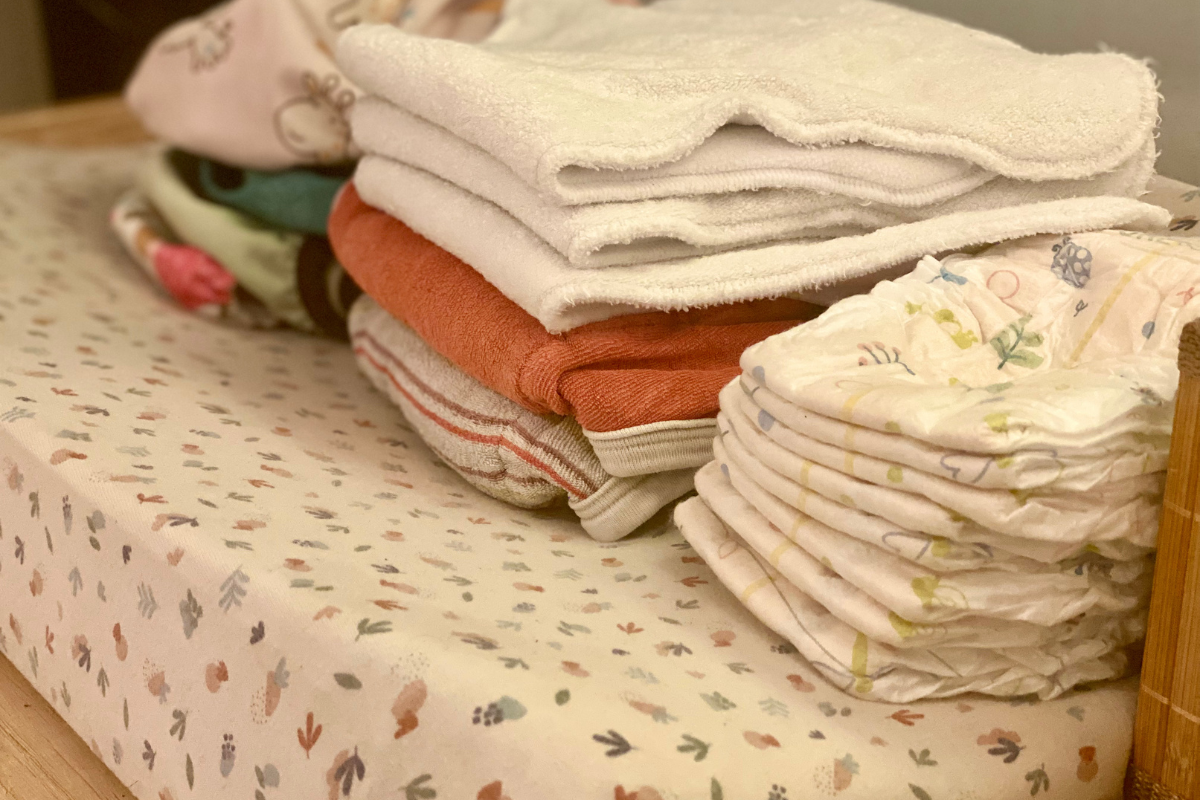
I made a habit of only buying things new if we really need them and I cannot find it second hand. Especially baby and children’s items are so easy to buy used. I often look for a good quality product online or in the store and then search for it secondhand. Be smart with picking the items up at someone’s place. Sometimes it might save you money to pay for delivery rather than driving far to get something. As a family, we buy small things second hand as our baby bed, carrier, clothes, cloth diapers, and more. But we also choose to buy our phones, laptops, and even cars second-hand. It might be a little older but most of the time still has a long life ahead and is much cheaper too.
DIY and free materials
Renovations and custom-made items are usually cheaper to do yourself. But pay close attention to the money you invest into materials. Sometimes you can be worse off buying materials and making something yourself (think about prices for clothes and fabric). In the best-case scenario, you can use free, used materials and make your DIY to save a lot of money.
You can afford cheap vacations as a stay-at-home mom
If you go on vacations consider to keep them as cheap as possible. We enjoy our camping vacations where we drive to a beautiful place, live in our tent, and enjoy free activities in nature.
5 ideas to make money staying at h5 ideas to make money staying at home
Most of us can live frugally and still not afford to be a stay-at-home mom. One option to consider is starting your own business. There are plenty of opportunities to earn money from home while taking care of your kids. Having your own business can give you the flexibility to work on your terms while still being there for your family.
- Home Daycare
- Pet sit
- Online paid work
- Sell homemade items
- Rent your care/home / other items
There are plenty of ways to make money while staying home with the kids. You could offer babysitting or pet-sitting services, taking care of other children or pets in your home. Another option is renting out a room in your house or even renting your car or other items for some extra cash. If you’re feeling creative, you could start a small business selling homemade products, like soap or candles. These side incomes can add up and help you stay financially stable while being at home with your family.
Reselling items can be profitable too, think about secondhand items that you can buy for a little and sell for a little more. Finally, there are many options to work a paid job from home. Inform yourself what kind of training or experience you need for such work.
Encouragement to follow your calling
Encouragement to follow your calling
I truly believe that we are all called to be the best wives and moms we can be. This can look different for every woman. Often there is no one-size-fits-all solution if you want to be a stay-at-home mom and it seems that you cannot afford it. But I want to encourage you: If you feel that your calling is to be a stay-at-home mom trust that God will help you to afford this goal.
For our family, it was best to have a second income for some more years. Therefore I decided to get a job where I could at least partially work from home. That way we split the care of our daughter between my husband who works from home on some days and me working from home on some days too.
Even if this is not always easy it works for now and I am grateful to have this opportunity. Find a solution that serves your family in the best way. And then trust that the Lord will bless it!
Philippians 4:13
What are your experiences and struggles when you want to afford being a stay at home mom? Share your story and tips in the comments. I would love to read all about it!