Pros and cons of cloth diapers vs. disposable diapering
Do you want to know if cloth diapers are worth it? Read my honest pros and cons of cloth diapers vs. disposable diapers.
A Brief History of Diapers: From Potty Training to Disposable Diapers
The information in this section comes from an interesting article in nature. People in warmer climates used to ‘potty train’ their babies right from birth. They responded to cues babies gave when they needed to go to hold them away from themselves to stay clean. People all over the world still use this approach to this day. It is called elimination communication. In colder climates, caretakers used fur and some natural materials such as moss or shredded soft bark to keep babies dry and clean. This was the first documented diaper and the system we still have to this day in cloth diapers and disposables.
Around the 1880s the safety pin was invented. This way you could wrap cloth diapers around the waist of babies more tightly. In daycare, people washed cloth diapers industrially with harsh chemicals. That led to a high frequency of diaper rashes and skin irritation. They changed the soaps and the problem started to disappear again.
During the Second World War, people started using more and more disposable diapers. At this time they used cellulose as a disposable filling. It was not until 1960 that acrylonitrile polymer was invited. The gel can absorb 100 times its weight without feeling wet. This made a huge difference in the use of disposable diapers, making them soon after the most used diaper in most of the world.
Diapering Systems Across the World: From the United States to South Africa
In the United States, disposable diapers dominate due to their convenience, contributing significantly to waste, while in South Africa, many families rely on cloth diapers for economic reasons and access to natural materials, as I share below.
United States & Disposable Diapers Dominance
In the United States, disposable diapers are the standard, with brands like Pampers and Huggies claiming a substantial portion of the market. According to the American Academy of Pediatrics (AAP), disposable diapers are widely used for their convenience and efficiency (AAP, 2021). However, there is increasing concern about the environmental impact of disposable baby diapers, as they contribute to about 3.4 million tons of waste annually in the U.S. alone (EPA, Diapers and Environment 2015).
South Africa as cloth diaper experts
According to this article, in South Africa, a significant portion of the population still uses cloth diapers primarily due to economic constraints and lack of access to disposable diapers. Cloth diapers are often cheaper in the long run, especially in rural areas. Many families rely on natural materials such as cotton or bamboo fibers, both of which are affordable and widely available.
Different types of Cloth Diapers: Which type of diaper is best?
You’re probably wondering, “What kind of cloth diaper should I get?” There are so many different types of diapers out there. Let’s break it down:
- Pocket Diapers: These are great options because they have a waterproof outer layer and a pocket where you insert an absorbent insert. They’re easy to use and come in different sizes. Pro Tip: Some pocket diapers come with snap closures, while others have hook and loop (Velcro), so you can choose based on your preference.
- All-in-One Diapers: These are essentially the easiest to use because everything is built in—a waterproof cover and absorbent layer, all in one. You don’t need to worry about inserts or covers. They’re perfect for busy parents and are super convenient.
- Prefold Diapers: These are a bit more hands-on and can feel like a bit of a learning curve at first, but they’re affordable and can be used with a diaper cover. I love these because they’re simple, but they do require some folding and snapping.
- Flat Diapers: These are the original cloth diapers—just a square piece of cloth you fold. They’re the cheapest, but also the most work.
My Advice: If you’re looking for convenience, all-in-one diapers are your best bet. But if you’re up for a little more effort and want to save some money, prefolds or flats would be your best choice. Don’t worry too much about the different brands as long as the raw materials are of high quality and everything that touches your baby is made from natural fibers.
Pros and cons of cloth diapers: Environment
The environmental impact of cloth versus disposable diapers is often a key consideration for parents. While disposable diapers contribute significantly to landfill waste, cloth diapers, though requiring water and energy for washing, have a much smaller environmental footprint over time. This comparison focuses on waste and water usage, shedding light on how each type affects the planet.
Disposables vs. Cloth Diapers: Landfill and Waste
The environmental debate between disposable and reusable diapers often centers around landfill waste. Research indicates that disposable diapers are a leading contributor to solid waste in landfills. Disposable diapers can take up to 500 years to degrade, while cloth diapers if reused for multiple children, have a significantly smaller environmental footprint (Graham-Rowe et al., 2013).
- A study from the Environmental Protection Agency (EPA) reveals that disposable diapers contribute approximately 3.4 million tons of waste annually in the U.S., a major part of which is non-biodegradable.
- Cloth diapers, while requiring energy and water for washing, result in far less waste in the long run, particularly if reused for multiple children or washed at home.
Disposable diapers produce 20 times more solid waste than cloth diapers.
Water Use: Cloth Diapers vs. Disposable Diapers
One of the biggest concerns with cloth diapers is the amount of water needed to wash them. According to a life-cycle analysis by Eunomia Research & Consulting in 2014, cloth diapers use three times more water than disposables in the washing process. That is a lot of water! However, the study found that when cloth diapers are used for multiple children and washed at home (without industrial cleaning), they are more environmentally friendly in the long run.
Thinking about water, energy, landfill, and waste of the average use is certainly important. If you choose to buy your cloth diapers second-hand, use renewable energy, or recycle water you can make an even bigger positive impact on the environment.
My Advice: If you’re passionate about reducing your carbon footprint and you’re willing to put in the work, cloth diapers are a fantastic choice. Don’t forget that you can use them for a long time.
Pros and cons of cloth diapers: Real data on costs
Numerous calculations are comparing the costs of both cloth and disposable diapers. In the following two paragraphs, I’ll break down these costs and share some tips on how you can further reduce them.
Do cloth diapers really cost less than disposables?
If you speak with others about the pros and cons of cloth diapers you hear often that cloth diapers are so much cheaper than disposables. Many people make calculations about the money you can save using cloth diapers.
While cloth diapers often have a higher initial investment, the long-term savings can be substantial. According to a study by Consumer Reports (2021), the average cost of disposable diapers in the U.S. for a child from birth to potty training is approximately $3,000. In comparison, a basic set of cloth diapers costs around $400-$800, depending on brand and type.
Honestly: I think this report does not represent the reality of everybody. That would mean that you would change your baby 8 times a day with a diaper costing 50 cents. That way you would spend almost 3000 dollars in the first two years. Well, where I live diapers for newborn babies are much cheaper than that and I don’t change my baby of nine months I don’t get 8 dirty diapers a day anymore!
The costs of cloth diapers highly depend on several factors:
- How often do you change your baby
- How early do you potty train
- How expensive are your disposable and cloth diapers
IHere’s a more concise and polished version:
“In my country, using 5 disposable diapers a day would cost around $600 for the first two years—about the same as a cloth diaper set. Even if you spend a bit more on disposables, you’ll likely still need them occasionally. For instance, I use disposables at night and when traveling to reduce luggage. So, even with cloth diapers, some disposable costs may remain.
Another thing to consider is the payment structure: disposables add up weekly, while cloth diapers require a larger upfront investment.”
How can you optimize the costs of cloth diapers?
All of that said, I still believe that you can save money using cloth diapers. If you buy your cloth diapers second hand you can reduce your costs significantly! I bought a complete set of cloth diapers for only 200 euros (approx. 215 dollars). Another advantage of using cloth diapers is that you don’t have to wash them multiple times before absorption is optimal. If you use your cloth diapers for more than one child the financial advantage is even bigger.
To sum it up on the pros and cons of cloth diapers on your finances I would say: it depends. If you use them consistently, buy them second-hand, and use them for more than one child you definitely can save money.
Pros and cons of cloth diapers: user-friendliness
Washing, storing, and managing cloth diapers can feel like a bit more work than disposables, but with the right system in place, it can be a manageable and rewarding choice. While they require regular washing, proper storage, and a bit more effort during diaper changes, cloth diapers come with their own set of benefits. Here’s a breakdown of the user-friendliness of cloth diapers, including tips on how to handle common challenges.
Washing cloth diapers
Mentioning the obvious: cloth diapers have to be washed regularly to be reused. This costs time and skills you don’t need with disposables. But let me say both time and how to wash them has never been a problem to me. You should wash your diapers every two to three days. In the meantime, you store them in a closed container or even better a so-called wet bag. You can put all the diapers into the washing machine without sorting diaper covers and inserts. Use a program at 140 degrees (60 degrees Celsius) and choose the longest option. For me, it works out pretty well to fill one machine every three days. If this is a problem for you try to search for a cloth diaper service close to you that washes the soiled diapers for you!
Even if the washing is very easy and can go quickly I struggle with planning the washing still. If we leave for a weekend to visit my in-laws (and we visit them almost twice a month!) I have to plan the washing right before the trip. I don’t like to waste a whole cycle on only a few diapers so I have to plan well in advance when I wash the diapers to do the last cycle before we leave. If you are not at home more frequently too and don’t plan to bring your cloth diapers to other places you might have the same planning struggles.
Smell and waste
When you use cloth diapers you have to store them somewhere until you wash them. When discussing the pros and cons of cloth diapers we cannot ignore the smell of the used diapers right? I never struggle with the smell of diapers when storing them for a maximum of three days in a closed container. When using cloth diapers I love to use disposable liners to collect potential poop. That way you can throw away the poop with a liner right away which helps to control smells a lot.
If you choose to use disposable liners think about a system to throw them away somehow next to your changing station. I use a closable container with both a waste bag and a wet bag to dispose of both cloth diapers and liners as well as disposable wipes.
Are diaper changes with cloth diapers complicated?
If looking at the pros and cons of cloth diapers this for me really is a con. I don’t like to change diapers anyway. With cloth diapers it costs more time and diaper changes have to happen more frequently. My baby is very active and sorting all the different layers under her little baby butt while her legs and body are in constant movement is a challenge. Doing it every two to three hours costs some focus and willpower on my end.
Another struggle is that to get the wet set of diapers into the wet bag you have to touch the dirty diaper with more than just your fingertips. This is the smaller struggle to me though since you can wash your hands afterward.
Leakage with cloth diapers
Did you ever think: how can such a cute little baby produce such messy poop? Until we introduce solids we all fight the running poopy diapers of our little miracles.
My mom cloth diapered all of us four children fright from birth with so-called ‘flats’. In their time this was by far the cheapest option and therefore she didn’t have a choice. Since then cloth diapers changed too and leakage is much improved. I know people who used cloth diapers right from the get-go. They didn’t report on major leakage problems. I tried them myself when my baby was 3 months old and it didn’t work for us. Therefore I decided to wait with cloth diapering until that 6 month mark. But to be fair: we had plenty of blowouts with disposables too.
Storage
The list of pros and cons of cloth diaper storage would be another con to me. Even if I have a system now that works, I have to admit that cloth diapers do need much more space to store than disposables. Be sure to make that space somewhere at your changing station so as to not get overwhelmed.
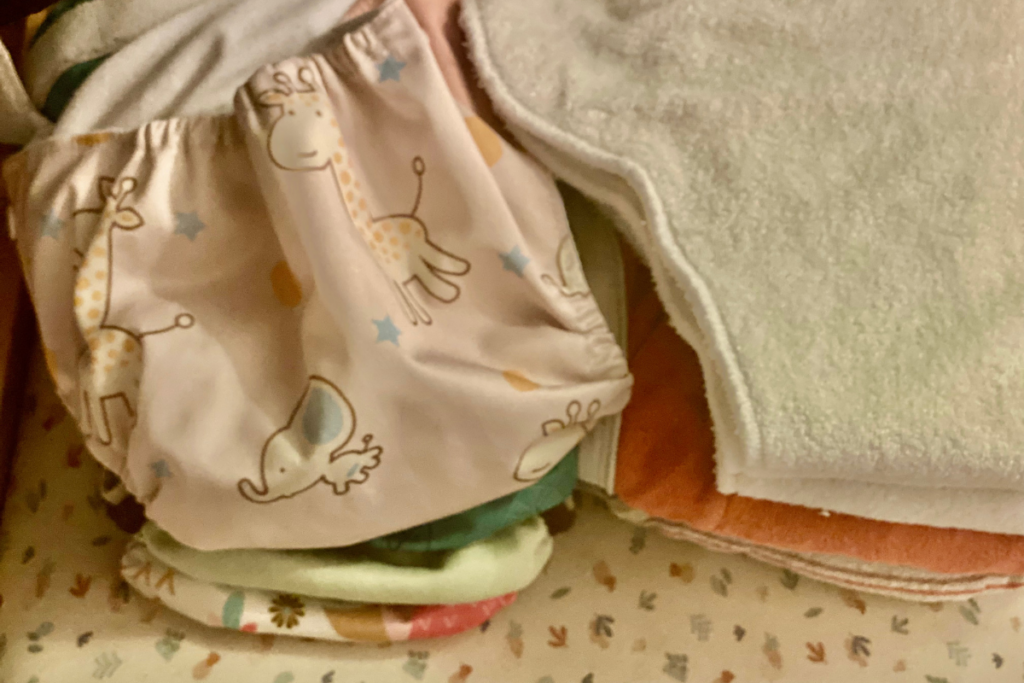
To sum up the pros and cons of cloth diapers and their user-friendliness I definitely wouldn’t say that it is a pro. But honestly, I think it is not such a huge con either.
Pros and cons of cloth diapers: Baby skin
Different factors influence the well-being of the baby’s skin when it comes to cloth diapers. On the pro side when using cloth diapers almost no synthetic materials will touch your baby’s skin. The only little bit of synthetic material are the plastic pants that might touch your baby legs. I think that this is the best thing about cloth diapers since many disposables bring your baby’s skin into contact with plastics and other synthetic materials. Furthermore, I always kept the feeling that disposables contained all kinds of things that I had absolutely no control over or knowledge of. People who are pro cloth diapering often use this as an argument for why babies with sensitive skin should have fewer diaper rashes with cloth diapers.
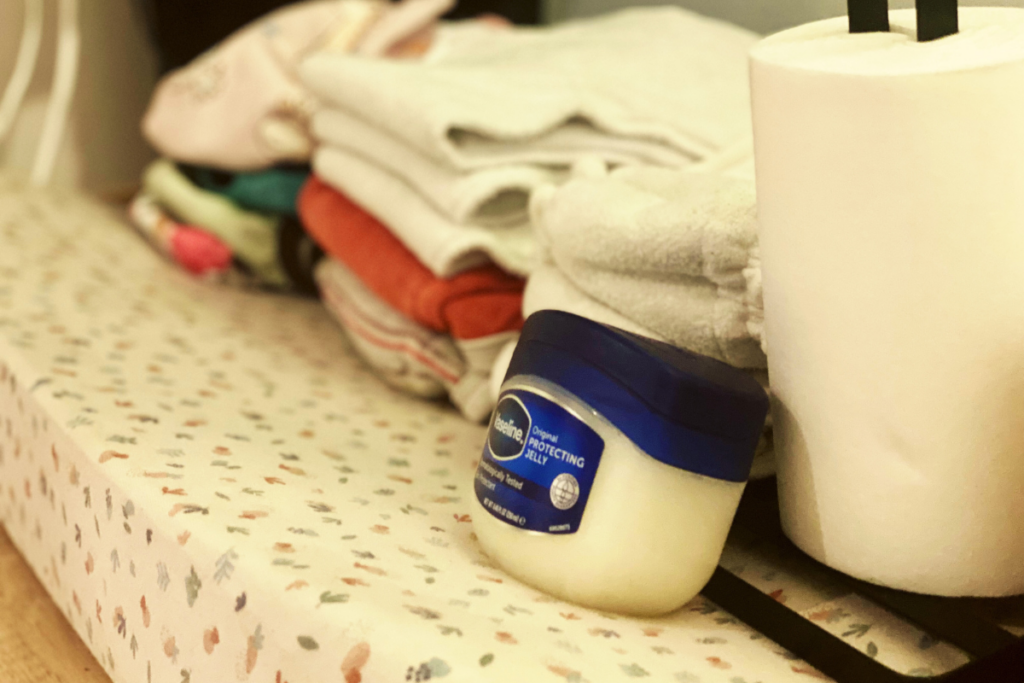
On the other hand cloth diapers don’t absorb liquid as effectively as disposables. This will leave the baby’s skin in a wet environment more often. I have friends who stopped cloth diapering for this very reason. In my personal experience, I have to pay more attention to diaper rash using cloth diapers too. If I cream my baby’s butt in petroleum jelly at least every other diaper change her skin stays perfectly healthy.
Therefore I wouldn’t say that cloth diapers are only a pro or con for the baby’s skin.
Pros and cons of cloth diapers: Potty training
It is commonly believed that children with cloth diapers are potty trained earlier than when disposable diapers were used. I couldn’t find much research about the subject, but there is a survey among 3000 parents that suggests exactly this. Their finding was that children who were cloth diapered 60% or more of the time were on average potty trained 9 months earlier than children where disposable diapers were used.
Another systematic review found the same tendency but also concluded that not much research was done on the subject.
The reason that parents are able to potty train their children earlier when using cloth diapers is that they actually feel wet when they pee. Therefore they do it more consciously and can communicate it earlier. In the future we will see if this will work for our baby as well.
The con you didn’t expect: the looks
One surprising challenge I encountered with cloth diapers was how they looked on my newborn. While it may seem like a small concern, the bulkiness and fit were initially difficult for me to get past, especially with her tiny frame. Here’s how I tackled that issue and what you can do if you find the look of cloth diapers a bit overwhelming.
What about those looks
I never expected the look of cloth diapers to be such a big issue for me, but it really caught me off guard. On my tiny newborn, the bulkiness just didn’t seem to suit her, and her cute clothes didn’t fit properly. The diaper made her look disproportionate, and I felt it restricted her movements.
While it might seem like a small concern compared to the many benefits of cloth diapers, it was definitely a big downside for me at the time.
What can you do about it?
If you are determined to cloth diaper there are a few things to overcome that strange look of your little one:
- Use onesies rather than pants
- Choose a loose fit
- Comfort yourself with the knowledge: that your baby will grow and the proportions will change
When I first tried cloth diapers at 3 months, I felt it wasn’t the right time. By 6 months, the diapers looked less bulky as our baby grew. Now at 9 months, you can’t tell if she’s a little chunkier or wearing cloth diapers, especially with looser onesies to help hide them.

Pros and cons of cloth diapers: summary
With all the pros and cons of cloth diapers, I listed the ones that were most important to me below:
Advantages of cloth diapers:
- Less waste
- More control over the materials they are made from
- Cost less if you buy them second-hand
- No plastics or chemicals on the baby’s skin
- Potty trained earlier
Disadvantages of cloth diapers:
- Cost a lot at once if bought a new
- More complicated and frequent diaper changes
- Diapers use more space
- More leakage in the first 6 months
- You have to wash them
- They look bulky on a little baby
What are your experiences or questions when it comes to cloth diapering? What was your biggest reason to use cloth diapers? Write it down in the comment section, I would love to read all about it! Would love to read all about it!